NYS Water Safety
In accordance with New York State requirements, below are three age-appropriate versions of important water and ice safety information. Please share with your student.
Grades K-3
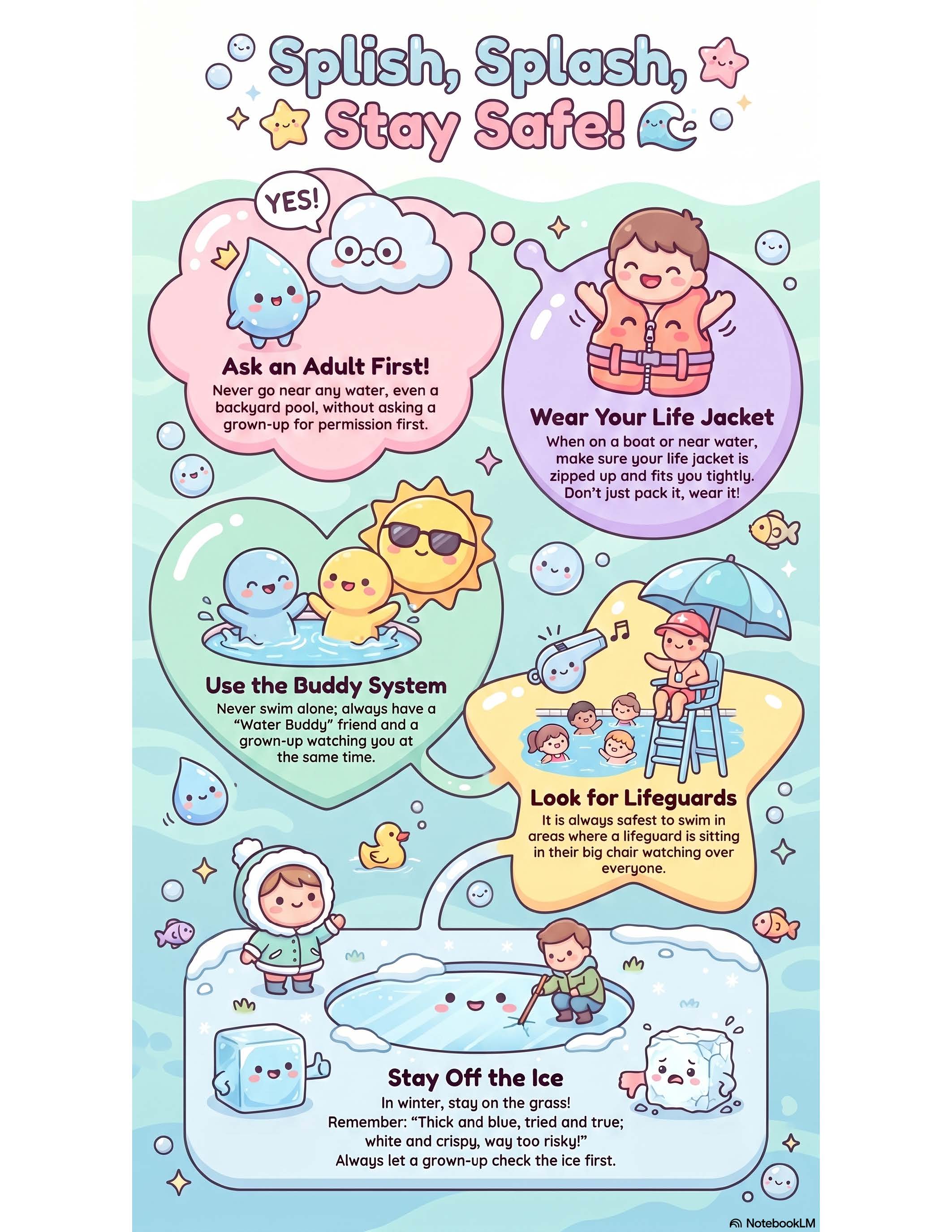
Ask an Adult First!
Never go near any water, even a backyard pool, without asking a grown-up for permission first.
Wear your Life Jacket
When on a boat or near water, make sure your life jacket is zipped up and fits you tightly. Don't just pack it, wear it!
Use the Buddy System
Never swim alone; always have a "Water Buddy" friend and a grown-up watching you at the same time.
Look for Lifeguards
It is always safest to swim in areas where a lifeguard is sitting in their big chair watching over everyone.
Stay Off the Ice
In winter, stay on the grass! Remember: "Thick and blue, tried and true; white and crispy, way too risky!" Always let a grown-up check the ice first.
Grades 4-7
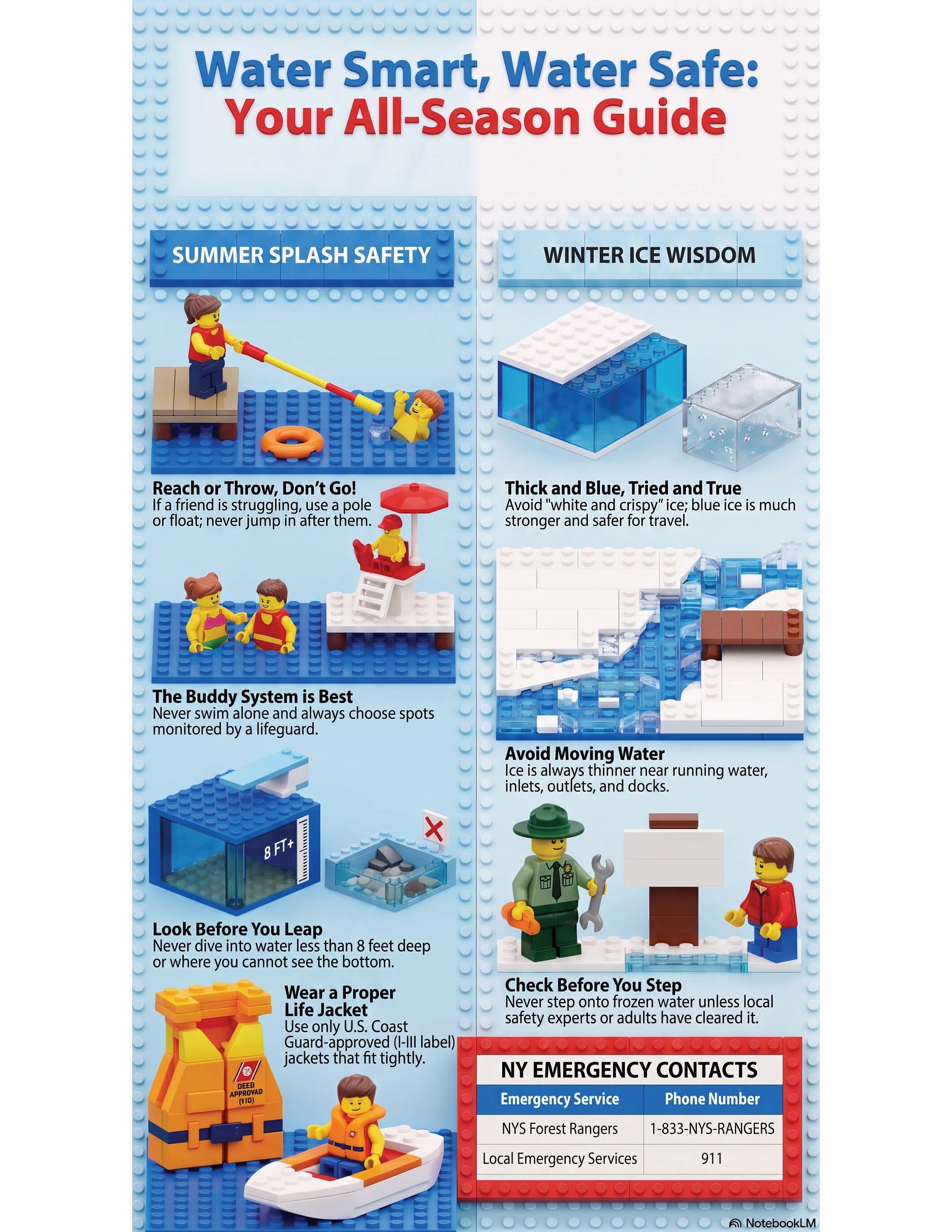
Summer Splash Safety
Reach or Throw; Don't Go!
If a friend is struggling, use a pol or float; never jump in after them.
The Buddy System is Best
Never swim alone and always choose spots monitored by a lifeguard.
Look Before You Leap
Never dive into water less than 8 feet deep or where you cannot see the bottom.
Wear a Proper Life Jacket
Use only U.S. Coast Guard-approved (I-Ill label) jackets that fit tightly.
Winter Ice Wisdom
Thick and Blue, Tried and True
Avoid "white and crispy" ice; blue ice is much stronger and safer for travel.
Avoid Moving Water
Ice is always thinner near running water, inlets, outlets, and docks.
Check Before You Step
Never step onto frozen water unless local safety experts or adults have cleared it.
NY Emergency Contacts
- NYS Forest Rangers - 833-NYS-RANGERS
- Local Emergency Services - 911
Grades 8-12
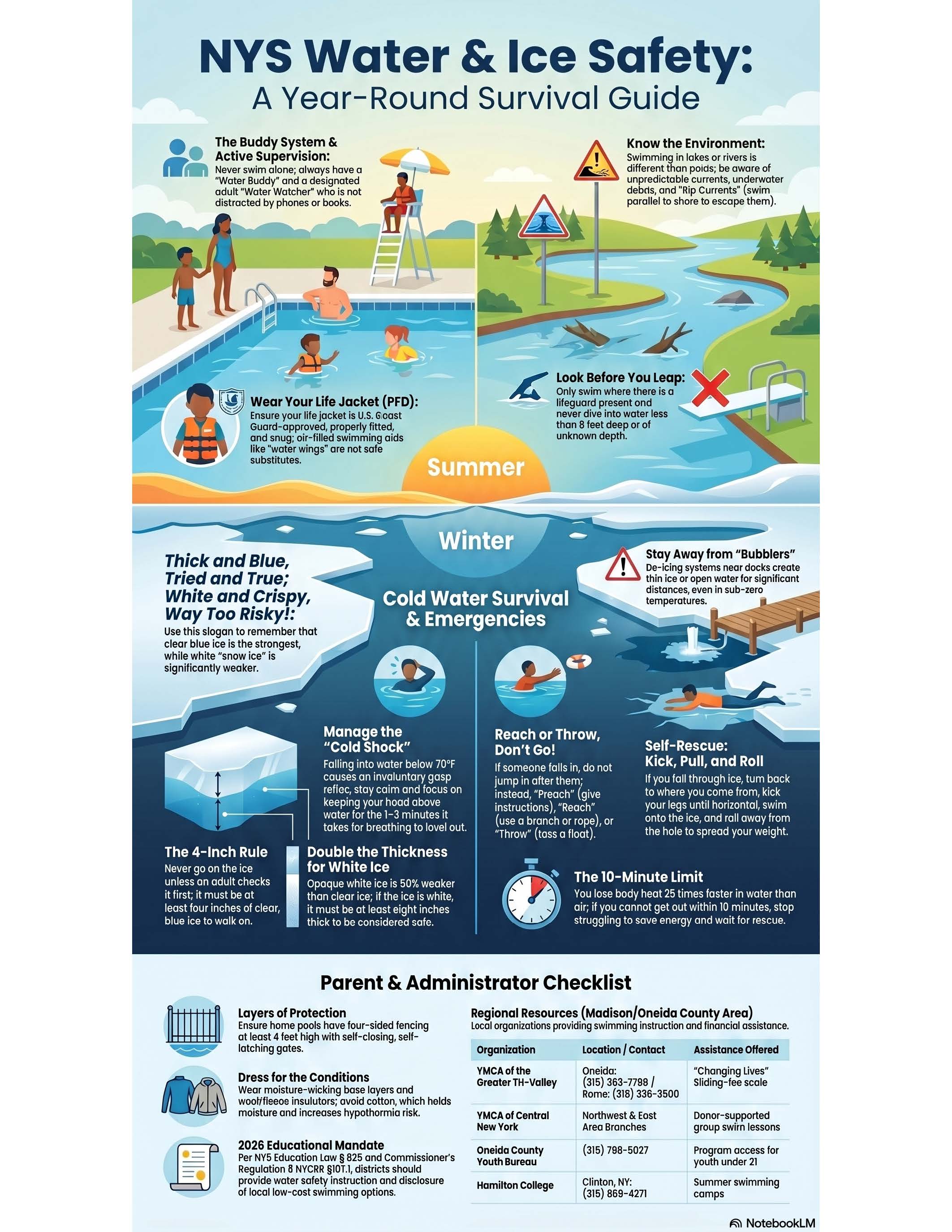
NYS Water & Ice Safety: A Year-Round Survival Guide
Summer
The Buddy System & Active Supervision:
Never swim alone; always have a "Water Buddy" and a designated adult "Water Watcher" who is not distracted by phones or books.
Wear Your Life Jacket (PFD):
Ensure your life jacket is U.S. Coast Guard-approved, properly fitted, and snug; air-filled swimming aids like "water wings" are not safe substitutes.
Know the Environment:
Swimming in lakes or rivers is different than ponds; be aware of unpredictable currents, underwater debds, and "Rip Currents" (swim parallel to shore to escape them).
Look Before You Leap:
Only swim where there is a lifeguard present and never dive into water less than 8 feet deep or of unknown depth.
Winter
Thick and Blue, Tried and True; White and Crispy, Way Too Risky!:
Use this slogan to remember that clear blue ice is the strongest, while white "snow ice" is significantly weaker.
Stay Away from "Bubblers"
De-icing systems near docks create thin ice or open water for significant distances, even in sub-zero temperatures.
Manage the "Cold Shock"
Falling into water below 70F causes an involuntary gasp reflex. Stay calm and focus on keeping your head above water for the 1-3 minutes it takes for breathing to level out.
The 4-Inch Rule
Never go on the ice unless an adult checks it first; it must be at least four inches of clear blue ice to walk on.
Double the Thickness for White Ice
Opaque white ice is 50% weaker than clear ice; if the ice is white, it must be at least eight inches thick to be considered safe.
Manage the "Cold Shock"
Falling into water below 70F causes an involuntary gasp reflex. Stay calm and focus on keeping your head above water for the 1-3 minutes it takes for breathing to level out.
The 4-Inch Rule
Never go on the ice unless an adult checks it first; it must be at least four inches of clear blue ice to walk on.
Double the Thickness for White Ice
Opaque white ice is 50% weaker than clear ice; if the ice is white, it must be at least eight inches thick to be considered safe.
Reach or Throw; Don't Go!
If someone falls in, do not jump in after them; instead, "Preach" (give insructions), "Reach" (use a branch or rope,) or "Throw" (toss a float).
Self-Rescue: Kick, Pull, and Roll
If you fall rhough ice, turn back to whre you came from; kick you legs until horizontal; swim onto the ice; and roll away from the hole to spread your weight.
The 1-Minute Limit
You lose body heat 25 times faster in water than air. If you cannot get out within 10 minutes, stop struggling to save energy and wait for rescue.
Parent & Administrator Checklist
Layers of Protection
Ensure home pools hove four-sided fencing at least 4 feet high with self-closing, selflatching gates.
Dress for the Conditions
Wear moisture-wicking base layers and woot;fleeoe insulutors; ovoid cotton, which helds moisture and increases hypothermia risk.
2026 Educational Mandate
Per NY5 Education Law § 825 and Commissioner's Regulation B NYCRR §JOT.I, districts should provide water safety instruction and disclosure of local low-cost swimming options.
Regional Resources (Madison/Oneida County Area)
- YMCA of the "Changing Lives"; contact Oneida 315-363-7788 / Rome: 318-336-3500; Sliding-fee scale
- YMCA of Central New York; Northwest & East Area Branches; Donor-supported group swirn lessons
- Oneida County Youth Bureau; contact (315) 798-5027 Program access for youth under 21
- Hamilton College Clinton, NY: contact (315) 869-4271; summer swimming camps